

19. Apr 2026 | Tags: Connect, Instruments, Integrations, Systems
Results stored – OK – But automatically in context of your LIMS Samples?
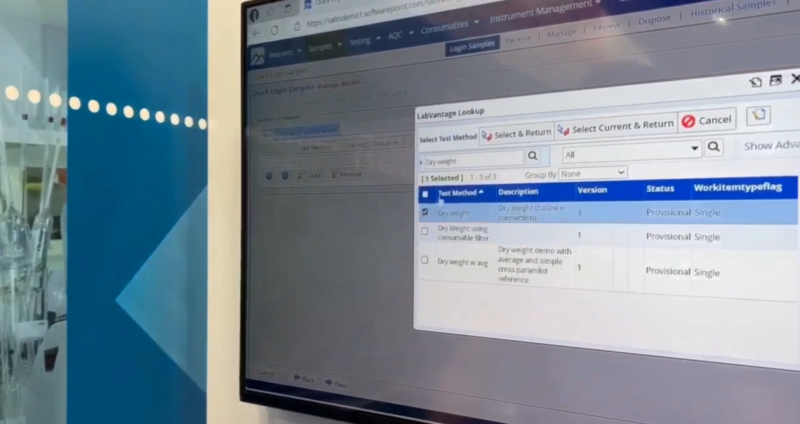
One of the most time-saving capabilities a proper LIMS can offer is to automate the saving of instrument results in such a way that they relate to proper Samples and Test. To have instrument results in a centralized data lake, “SDMS” or similar repository is one thing (anyone can do). But it is more essential to have the appropriate results saved in correct context in the LIMS database, directly accessable and understandable.
In addition you ideally have a controlled access to all raw data (for audit purposes for example), including e.g. High resolution images (from MS or what not) while at the same time defined results are readily accessible in LIMS, providing automatic trend graphs, OOS comparison data, even result reports. LabVantage LIMS can automatically process instrument results, such as make calculations to original concentration of sample, compare to specs, etc. LabVantage SPC and Control Cards automatically places new results in appropriate trends and statistical graphs.
Making this happen is often one of the most tedious tasks during LIMS implementation – except when you have LabVantage SDMS Connect. Our team has implemented thousands of instrument connections – both 1way and 2way. LabVantage SDMS Connect provides a standardized way of connecting any kinds of instruments. Our library includes more than 800 different instrument connection drivers s that provides the basis to implement any new instrument connections efficiently.
Different types of instrument connections:
1) “Simple instruments” – what does this actually mean: They are simple to use. They just provide one numerical result at a time, with no other context. Often electrodes (pH meters) and balances fall into this category. LabVantage LIMS can be connected to these kinds of devices to receive that one result at a time. Note: “Simple instrument” is easy to use, not necessarily easy to automate or connect.
2) “1-way connections”: This usually means, that instrument results are automatically saved in LIMS database, including their context: Which sample, which tests, and other metadata when necessary. This requires that the instrument has LIMS Sample ID or similar available. For example, laboratory often reads LIMS Sample barcodes directly to the instrument rack/tray when loading. SDMS Connect also stores all (in addition to results) defined data in a traceable way: For example instrument raw data files, images such as spectrograms.
3) “2-way connections”: The instruments/devices with the most volume can be even further automated with a 2-way connection. In addition to 1-way connection, now instruments gets Sample and run sequence information from LIMS. Operator at the instrument “only” needs to load samples and start the run. And because we want to be honest and realistic, let’s mention this: This requires some more setup in LIMS (templates for control samples, run sequences). But when implemented: Efficiency is maximized.
4) “System connections”: Instead of connection to single instruments/devices, we can connect to systems or networks of instruments. Those familiar with chromatography know the term “CDS”, Chromatography Data System. Similar centralized management software exist for balances and other instruments as well. When LabVantage SDMS Connect discusses with such system, LIMS workflow becomes even simpler when setup. The most common such systems in the market include Waters Empower CDS, Agilent OpenLAB, Thermo Chromeleon , Mettler Toledo’s LabX. Our R&D is constantly developing our connections to these popular systems.
LabVantage Instrument Register removes your Instrument maintenance excels
LabVantage LIMS Instrument Register is a popular embedded functionality among our customers. I can be used (with or without instrument connections) as log for usage, maintenance and troubleshooting, for scheduling maintenance and calibration tasks, as well as user certifications.